Designing a Scalable System That Bridges Strategy and Store Execution
A UX Systems Case Study
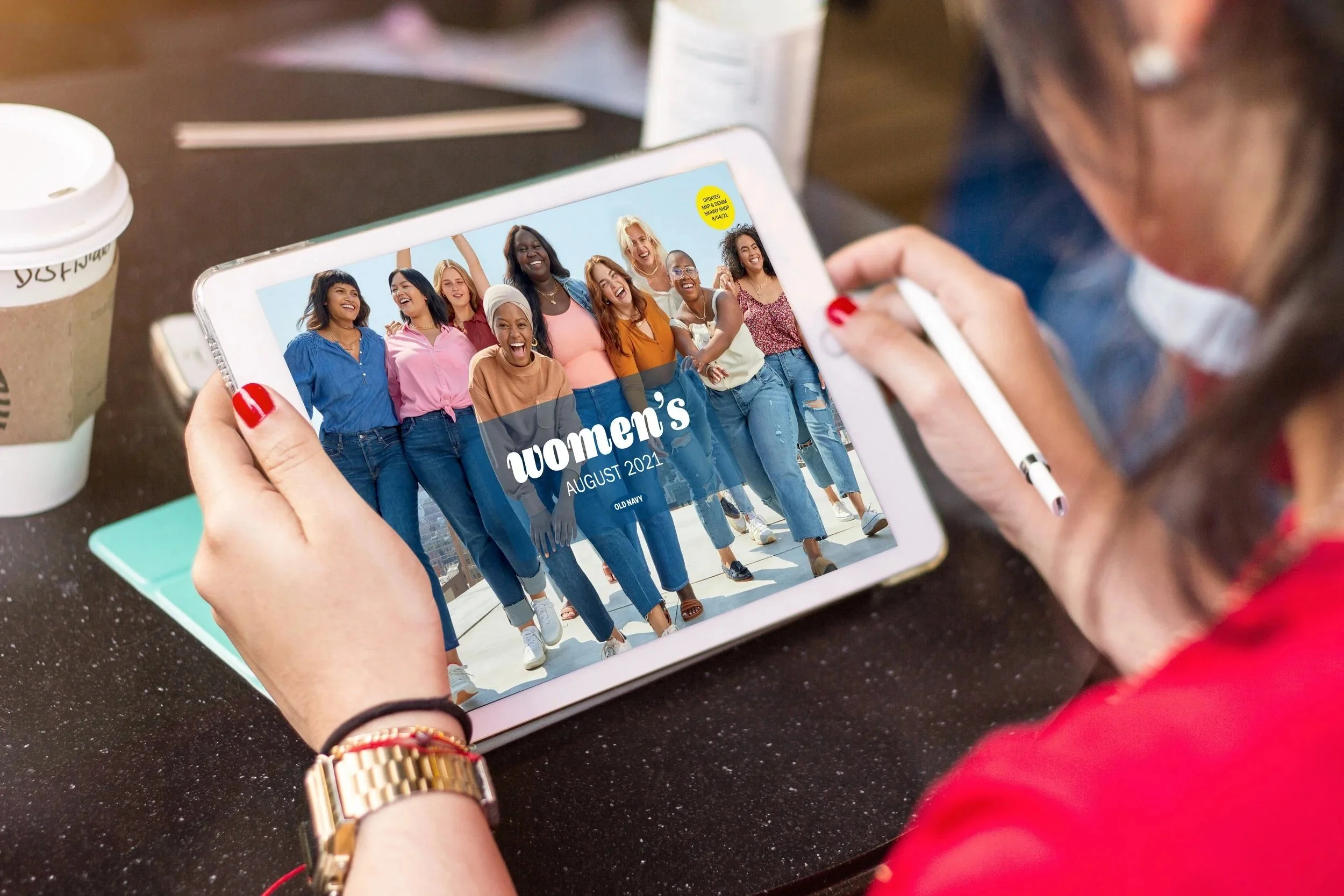
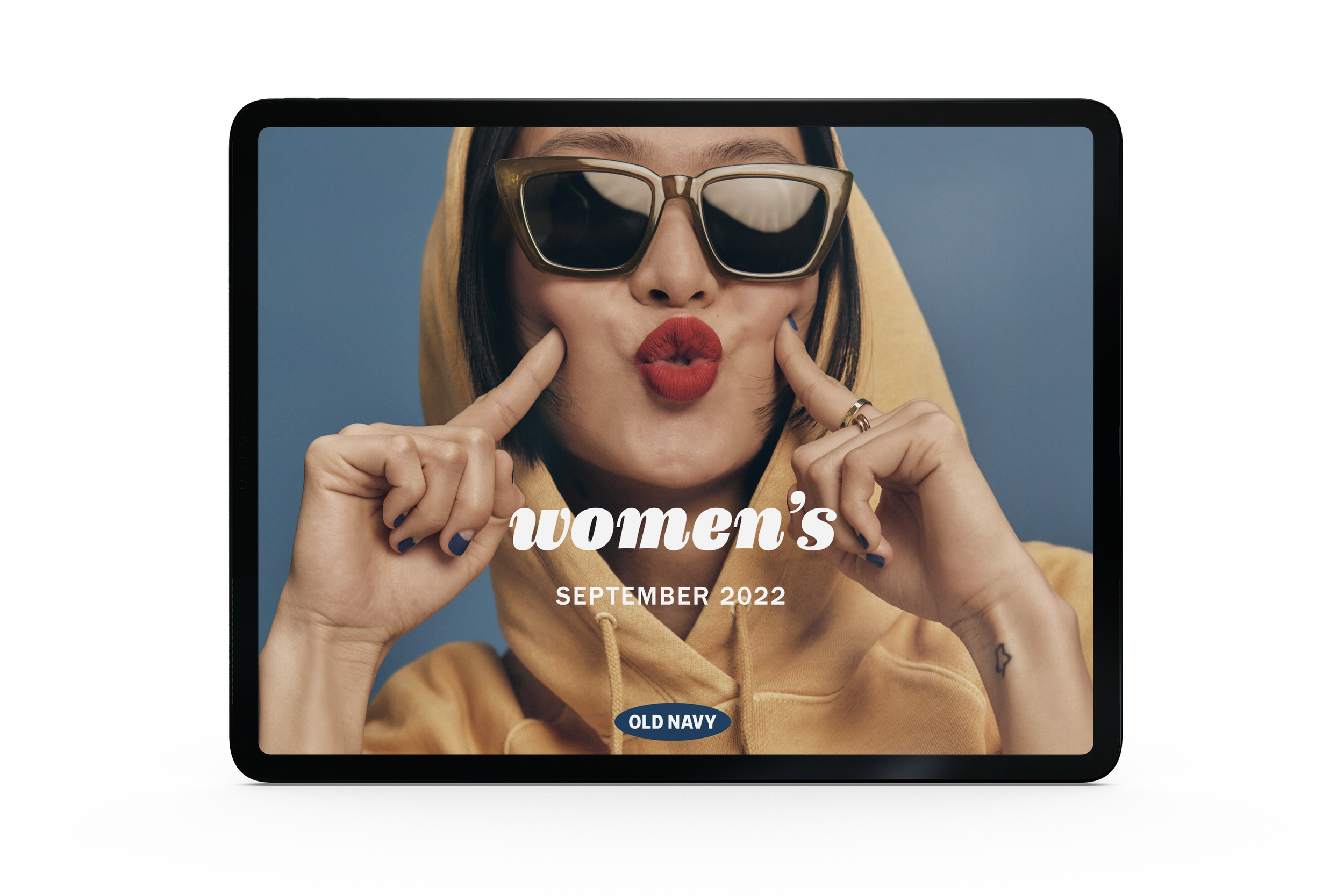
The Style Guide is a digital, internal toolkit used across Gap Inc. brands. It aligns cross functional teams around seasonal visual merchandising strategies, product information, and brand standards, enabling consistent execution across every store location.
Executive Corporate Workflow:
Top corporate leaders decide what trickles down to the corporate visual merchandising team. They also select the look and feel of what the new product will be for the upcoming season
This is where the trickled down strategies from the top come together for the style guide.
This information then gets trickled down
corporate visual merchandising team create and work with an in-house physical warehouse on site store. The design team supports the visual merchandising team and collaborates to create the style guide.
Style guide becomes the vehicle used to communicate to the store managers in the field
This is where the magic happens this symbiotic connection relationship between
-corp
-field stores and the
-customer
This circle of life is what keeps the style guide relevant, breathing, because corporate and design constantly get live feedback from stores, managers, customers from product feedback to customer experience feedback as well as product feedback Like what sells and what doesn’t.
THE CONTEXT
Corporate Directors, Merchants, Buyers, Product, Marketing & Creative
Corporate Visual Merchandising
Corporate Design
Field Visual Merchandising
Field Logistics & Store Operations
Each team plays a distinct role, but success depends on one thing: alignment.
The Context
Before we break down the case study analysis, you will need context.
Let’s start by discussing the teams that participate in the production of the Style Guides: on the corporate side, you have the Executives, Directors, Merchants, Marketing, Visual Merchandising, and Creative Department. And, on the field side, you have the Regional Directors, Visual Merchandising Managers, Logistics and Store Operations.
Each team plays a distinct role, but success depends on one thing: alignment.
In the container of the executive end-to-end process, which takes place at the top of the chain, the finalized executive decisions pertaining to business goals and visual brand guidelines, eventually get trickled down to the Corporate Visual Merchandising teams, where executive strategies take on physical form.
Once, the Corporate Visual Merchandising teams receive the executive strategy, they synthesize key information and develop in-store maps that strategically position products, marketing and promotions on the sales floor.
After finalizing in-store concepts, the merch team prepares materials to hand off to the Design team. This is when both teams come together to pass off information. After alignment is done, the focus shifts to design, production methods and design frameworks.
Design Thinking guides the overall design strategy by helping the team understand both the customer and internal needs to create solutions that work for everyone. However, staying focused on the customer remains the top priority. Design Thinking keeps the team grounded in customer-centered design, which is the foundation for creating Style Guides which duals as toolkits.
The Style Guide toolkit is intended to help the teams identity and solve problems while providing a clear, consistent approach to product presentation. Five different style guides get developed, each contributing to a comprehensive Style Guide covering seasonal strategies, brand guidelines, product data, marketing and promotions, customer journey maps, and product placement maps.
UX methodology centers on investigating root pain points, analyzing feedback and auditing legacy Style Guides. By using Design Thinking to anchor the research and ideation, we discovered that the challenges faced by corporate and field teams were actually just symptoms of a much larger, unaddressed systematic problem.
We discovered the problems to be directly linked to a lack of clarity, empathy and leadership.
The challenges stores were facing when new product arrived early at store locations was that there was no corporate visual direction upon product arrival, and because there was no way of knowing how to place the product on the floor, the product remained in boxes in the back stockrooms. This meant stores took a financial hit to daily business goals resulting in loss of revenue.
The lack of clarity and empathy was a key point in our research approach because it helped us understand what we were building, it directly linked our discovery to how the corporate teams did not have a single person on their teams that had any field working experience. This was evidence that the corporate process lacked insights.
To illustrate this, the corporate visual merchandising teams were creating in-store concepts without taking into account that every store comes in different architectural shapes, sizes, and climate locations.
Evidently, this exposed a fracture in the overall process. The lack of understanding when it came to the field visual merchandising process was a missed opportunity for everyone because it meant that important information was being left out, leaving gaps in the process, this shed light on how no one had a full understanding of the goal, of what is important, of the problem we are all trying to solve, of our customer.
Our mission was to create a toolkit with solutions based on analyzing the pain points, by asking questions, and by making sure we understood the task and goal. This is exactly why I was brought on to the Design team because of my hybrid experience and knowledge of both processes before joining the team, I spent almost a decade in leading teams on the field executing visual merchandising visual strategies. And as a direct Style Guide end user, I brought insights.
I will explore some of the challenges we discovered.
The Ecosystem
End-to-end parallel workflows
Visual Merchandising Corporate Workflow:
The Design team & Visual Merchandising teams then take the trickled down inoformation and create a design system crafting the seasonal strategy, brand guidelines, product priorities, marketing and storytelling. By creating it in in in-house warehouse style store where it gets photographed and created ni collaboration with the Design team.
Field Workflow:
Field Visual Merchandising and Logistics teams execute the corporate visual strategy in stores, placing products, setting floor sets, and bringing the brand vision to life.
When these workflows are not aligned, execution suffers.
The Customer
All teams work toward a shared goal: delivering an accessible, affordable, and easy-to-shop experience for our customers. Our approach is rooted in a human-centered mindset that aligns customer needs with business goals. By keeping the customer at the center of every decision, we create meaningful experiences that drive both customer satisfaction and business success.
The Foundation
The Old Navy Style Guide is a toolkit built for visual merchandising managers and cross-functional teams giving everyone a shared foundation for consistency, clarity and alignment.
It integrates brand guidelines, product data, and design systems to deliver an exceptional in-store customer experience for every customer.
It also serves as the connective bridge between corporate and field teams, supporting the end-to-end workflows that bring the brand to life in every store.
The Herculean Collective Effort
To understand the purpose and impact of the Style Guide, it's important to first understand the ecosystem it operates within. The Style Guides exist within a larger network of teams, processes, and systems that shape how retail experiences are designed and delivered. At the corporate level, stakeholders, executives, buyers, and merchants synthesize business objectives, product information, and visual direction into a cohesive strategy.
The Style Guide serves as a vehicle for translating that strategy to the field, providing stores with the information they need to plan, execute, and deliver consistent business and visual experiences. Understanding this relationship between corporate and field teams provides essential context for understanding the Style Guide's role within the organization.
Why the Style Guide Exists
As Old Navy transitioned from printed to fully digital Style Guides, stores began receiving large volumes of new merchandise without timely corporate direction. Without clear guidance, products sat in stockrooms instead of reaching the sales floor, creating missed sales opportunities and inconsistent customer experiences.
At the same time, the Visual Communications Design team faced growing demand to produce fast, scalable Style Guides with limited resources.
This project exists to eliminate ambiguity in merchandising decision by providing clear visual guidance that helps stores move product to the floor faster, drive consistency, and recover missed sales opportunities.
What It Includes:
Store layouts and visual mapping
Seasonal marketing and visual strategy
Guidelines and step-by-step how-tos
Product data, images and illustrations
Key merchandising elements and presentation standards
Why It Works
Beyond ensuring consistent store rollouts and exceptional customer experiences, the Style Guide enhances the design system, strengthens communication across teams, and supports sales through consistent in-store execution aligned with Old Navy’s business goals.
My Role
I was brought onto the team for my hybrid background in UX/UI, graphic design, and first-hand experience as a field Visual Merchandising Manager. Having used Style Guides as an end user, I understood operational constraints, tradeoffs, workflows and the end-to-end product journey, informing research, UX decisions, visual design and the evolution of the Style Guide system.
I worked closely with Visual Merchandising, Product Managers, Merchants, Styling, Marketing, Photographers and store visual and operations partners across all divisions.
Role: Visual Designer
Team: Visual Communications Director, Designer I, UX Designer and Senior Visual Merchandising Manager
Partners: Corporate & Field Visual Merchandising Teams
Tools: InDesign, Illustrator, Figma, Miro, Airtable
The Problem Is A Symptom Of A Bigger Issue
The existing deliverables were the ones we discovered to guide us insight in understanding the challenges all were facing
THE CHALLENGES
The issues our team were trying to solve to be able to support is to get the store teams to know where to place the product they have in boxes in their back stockrooms instead of the sales floor making money.
Due to the lack of timely communication and direction from corporate the Style Guides are late to stores.
After Inspecting, investigating and researching the deliverables and systems we inherited our goal was to simply make it easier for teams on the field to read and digest the data.
We discovered that they need better visuals, maps, direction, communication, layouts, hierarchy and overall clarity and sense of knowing direction and vision for how to, where to, and what to place where on the sales floor. When planninh phase is upon them, for floor sets updating products and in-store environments.
Now we can dive into the guts of the style guide
this is what out team walked into, had to work with,
old deliverabnles
maps
style guides
we looked t how they were contributing to the prblem and causing friction
these old deliverables informaed us with important data to be able to come up with improvements
New merchandise arrives in stores in large volumes
Without clear direction from corporate, store teams don’t know where to place it
Products sit in stockrooms instead of on the sales floor
Customers don’t see the new product
The business loses sales.
Insights are brought by inspecting and analyzing the problem and challenges contrasting that to where we want to be and what that looks like
This is why we’re trying to solve the problem. All of this is evidence that there is a problem by looking at the artifacts such as maps, old style guides, feedback from store managers and stores and teams that roll out the floor sets
This looks at, inspects, research, asks questions compares and investigates the problem and the challenges and asks why.
This says “ok we’re having pain points here”
point 1 (problem/ pain point ) is where we are experiencing the pain points, we address the why , what, who, where, then, Point 2 is (is after we solve it and we successfully solved the problem) then after this gets synthesized into the Style Guide to distribute, the style guide is the solution to the problem.
THE PROBLEM
analyze the problem
make sure you understand the task
Ask questions
do we have all the info?
Evaluate and understand the audience (the customer) before dong any visual work
THE DISCOVERY
The Human Problem
FIELD MANAGERS ARE LEFT SCRAMBLING WITHOUT VISUAL DIRECTION
Field Visual Merchandising Managers receive large volumes of new products that must be placed on the sales floor. Without a Style Guide providing actionable direction, teams are forced to improvise under time constraints, leading to inconsistent execution, delayed floor sets, and misalignment with brand standards.
When large volumes of new products arrive in stores without aligned guidance, full-price merchandise frequently remains in back rooms instead of driving daily business goals on the sales floor. Field teams are prepared to execute, but lack the direction needed to act effectively.
corporate expectations vs store reality
lack of direction
sales loss
hurting business
daily goals not being met
We drive to solve a problem, not knowing that the problem the stores were experiencing was a symptom of the big picture process that had to do with lack of clarity and empathy because corporate expectations didn’t match the in-store realities. All came down to the fact that corporate employees never worked in stores that made it frustrating for users of the style guide because corporate employees didnt’ understand the in store processes. This is where my experience and expertise comes in, part of my role was to bridge this gap.
The problem this style guide tackles is to address lacking of clear communication and timely direction. However, what the stores are experiencing is a symptom of a bigger problem.
The bigger problem is lack of empathy, clarity and leadership.
the corporate process does not take into account real life in-store physical execution challenges that field leadership encounters while constructing the corporate visual strategy.
Corporate expectations don’t match in-store reality. All comes down to the fact that corporate employees have never worked in stores.
This is a major pain point because it’s frustrating for users of the style guides because corporate doesn’t understand real life process frameworks of how to physically execute floorsets the planning team execution things like store architecture don’t match the corporate vision therefor they have to prioritize and compromise with the space each store uniquley encounters.
Corporate Pain Points
(THE BUSINESS CHALLENGE)
The Organizational Problem
NEW ARRIVALS STALL BEFORE THEY EVER REACH THE CUSTOMER
Store Pain Points
What We Discovered
What is the problem we are trying to solve? What are the challenges that contributed to the problem? What are the challenges we encountered in our inherited artifacts of the project?
THE RESEARCH
We are dissecting the data, the evidence, the research to be able to comprehend the pain points
The Data
The Evidence
The Understanding
These are the artifacts that were researched, investigated and inspected to guide our team in redesigning the Style Guide to improve the overall usability.
/Dissecting Artifacts
The Persona
The Feedback
Surveys
Maps
These two maps connect.
They create loyalty equals returning costumers
Journey Map
Journey Map - emotional + behavioral flow
identifies friction
the costumer journey map creates the in-store flow that makes it easy to access product on the floor. Guided by the promotions and marketing we aim to get Inside the mind of the customer. Everything is strategically placed on the floor. The placement strategy has an emotional, physical and psychological connection to create an immersive customer experience.
Floor Map - physical execution of that flow
Floor Map
Ingridients = Research + Insights + Discovery
what was wrong
THIS IS THE EVIDENCE
this is looking at users so every design decision has a purpose
this shows how you understood the problem
persona
user interviews
analytics
competitive analysis
quotes
charts
screenshots
user research
user stories
surveys
affinity mapping
user persona
user journey map
pain point
raw data
user journey
store feedback online shopping vs brick and mortar
THE IDEATION
The Concepts,
The Process,
The Strategy
/The Design Process
Design a comprehensive Style Guide that translates corporate visual merchandising strategy into clear, executable guidance for field teams supporting a faster execution, consistent product placement, and a cohesive customer experience across all Old Navy stores.
Recipe = Process (how i designed) + Strategy (How I approached it) + Ideation (design thinking)
This shows how you think
how insights shaped my design decisions
we explored creative directions through moodboards and early concepts so we can see the vision come to life
show iterations
sketches
wireframes
flows
prototypes
user flows
information architecture
wireframes
early concepts
design principles
people love seeing progression show the progression
sketch > wireframes > final ui
THE SOLUTION
THE SOLUTION
The Customer,
The Impact
The Design Solution
final dish = solution (what i built)
this section explains
“based on research, here’s what I designed and why”
Reveals what I built the final product
polished mockup
flows
maps
interaction explanations
key features
screens
interaction details
maps
Explain why decisions were made
THE IMPACT
Review = results + reflection (what improved)
This is the most important section
include metrics if possible:
+32% onboarding completion
-18% support
adoption
consistency improvements
customer experience shift
efficiency metrics
what improved
what I’d do differently
THE RESULTS/REFLECTION
Great designers show learning
example:
what I learned…. creative process can be a dry journey
what i would improve
next steps are
What I would improve is include AI in their system to ask questions to speed up their own workload process instead of waiting to hear back from corporate and wait to make final decisions.